
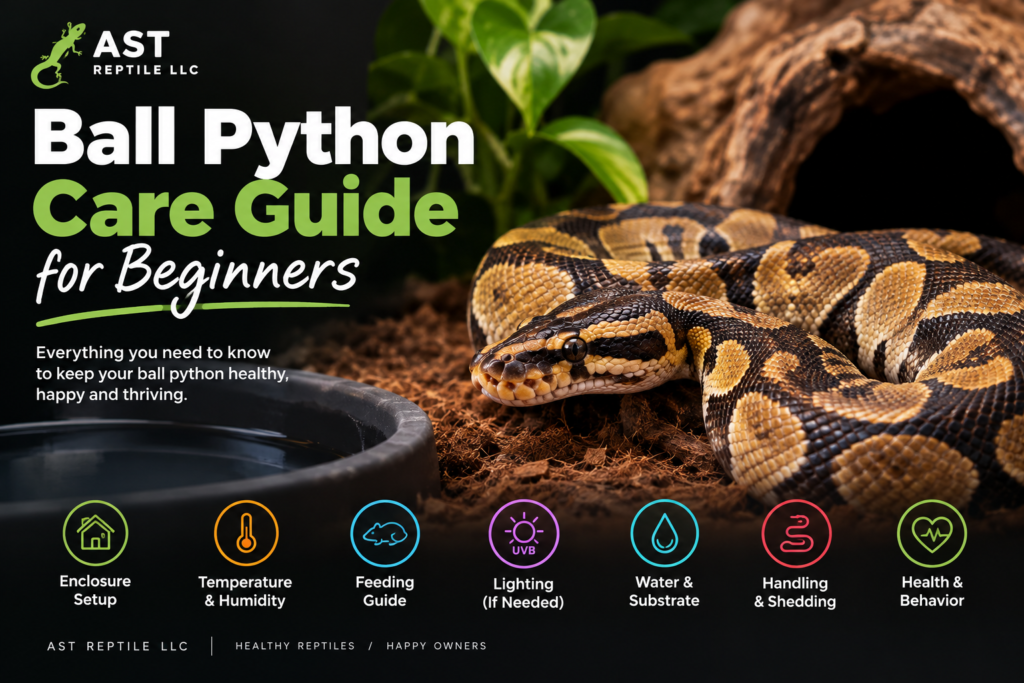
Ball Python Care Guide for Beginners
Ball pythons are one of the most popular pet snakes and are often chosen by first-time reptile keepers. They are generally manageable in captivity, but they still need a properly maintained environment to stay healthy.
A good ball python setup should provide the right enclosure, temperature gradient, humidity, hides, substrate, feeding routine, fresh water and regular monitoring.
What Does a Ball Python Need?
A beginner ball python setup should include:
- A secure, appropriately sized enclosure
- Warm and cool areas
- At least two suitable hides
- Reliable heating equipment
- Thermometers and a hygrometer
- Appropriate substrate
- A large water bowl
- Appropriate prey
- Feeding tongs
- Safe enclosure décor
Ball pythons are solitary animals, so they should normally be housed individually.
1. Ball Python Enclosure Setup
Ball Python Care Guide
The enclosure should be secure, well ventilated and large enough for the snake to move comfortably.
PetMD lists 10–20 gallons for juveniles and 40+ gallons for adults, while also recommending providing the largest appropriate habitat possible.
Your snake should have enough space to move between its warm and cool areas without difficulty.
Provide Two Hides
A ball python should have a secure hiding place on both the warm and cool sides of the enclosure.
The hides should feel enclosed enough for the snake to feel secure rather than exposed in an oversized open space.
2. Temperature for Ball Pythons
Ball pythons need a temperature gradient, rather than one identical temperature throughout the enclosure.
PetMD recommends roughly 95°F on the warm side and around 78°F on the cool side.
Other modern husbandry guides recommend somewhat different temperature targets, including a warm hide around 86–90°F and a cool area around 72–80°F.
The important takeaway is to measure the actual temperatures at snake level and provide both warm and cool areas.
Use reliable digital thermometers rather than judging temperature by touch.
3. Ball Python Humidity
Humidity is important for hydration, respiratory health and successful shedding.
PetMD gives a general enclosure humidity range of 40–60%, with higher humidity recommended during shedding.
ReptiFiles recommends a higher overall humidity range for ball pythons, illustrating that husbandry recommendations can differ depending on the setup and methodology.
Because of those differences, use a quality hygrometer and monitor your snake’s enclosure rather than guessing.
A humid hide can also give the snake access to a more humid microclimate when needed.
4. Do Ball Pythons Need UVB?
Ball pythons can survive without dedicated UVB in some traditional captive setups, but modern reptile husbandry guidance increasingly supports providing low-level UVB and a natural day/night cycle when it can be installed correctly.
Lighting should always be positioned according to the specific bulb and enclosure setup.
5. What Do Ball Pythons Eat?
Ball pythons are carnivores and eat appropriately sized whole-animal prey.
Captive ball pythons are commonly fed appropriately sized rodents.
The prey should be suitable for the snake’s size, and feeding frequency should be adjusted according to the animal’s age, body condition and individual needs.
What If My Ball Python Refuses Food?
Ball pythons are well known for occasionally refusing meals.
A temporary feeding refusal does not automatically mean the snake is sick. Environmental conditions, seasonal changes and stress can all influence feeding behavior.
However, prolonged fasting, weight loss or other changes should be discussed with a qualified reptile veterinarian.
6. Fresh Water
Provide a clean water bowl that is large and stable enough for the snake to drink from and, when desired, soak in.
Change dirty water promptly and keep the bowl clean.
7. Choosing Ball Python Substrate
Common substrate options include paper-based bedding, cypress mulch, coconut-based substrates and other reptile-appropriate materials.
Avoid pine and cedar bedding, which can be harmful to reptiles.
The substrate should also work with the humidity requirements of your particular enclosure.
8. Handling a Ball Python
Ball pythons can become comfortable with regular, gentle handling.
Support the snake’s body and avoid sudden movements. Give a newly acquired snake time to settle into its enclosure before beginning frequent handling.
Always wash your hands after handling your snake or cleaning its enclosure.
9. Ball Python Shedding
A healthy ball python will periodically shed its skin as it grows.
Before shedding, you may notice:
- Duller coloration
- Reduced activity
- Changes in appetite
- Cloudier or bluish eyes
Maintaining appropriate humidity and providing a suitable humid hide can help support a normal shed.
Do not pull stuck skin from your snake. Persistent shedding problems should be discussed with a reptile veterinarian.
Ball Python Beginner Checklist
Before bringing a ball python home, prepare:
Habitat
- Secure enclosure
- Warm hide
- Cool hide
- Safe substrate
- Water bowl
- Safe décor
Monitoring
- Digital thermometers
- Hygrometer
- Thermostat for controlled heating
Feeding
- Appropriate prey
- Feeding tongs
- Safe feeding routine
Lighting & Heating
- Appropriate heat source
- Suitable lighting setup
- Proper day/night cycle
Frequently Asked Questions
Are ball pythons good for beginners?
Ball Python Care Guide
Ball pythons are commonly considered a beginner-level pet snake, although they still require proper temperature, humidity, feeding and habitat management.
How big does a ball python get?
Adult ball pythons commonly reach around 4–5 feet, although individual size varies.
How long do ball pythons live?
With proper care, ball pythons can live for around 30 years or more.
Do ball pythons need to live together?
No. Ball pythons are solitary and should generally be housed individually.
How often should a ball python eat?
There is no single feeding schedule that applies to every ball python. Feeding should be based on age, size, body condition and individual needs.